Westerringspoor F400, Ghent

2019/2022
EvoltaProjectsWesterringspoor F400, Ghent
Client
City Council of Ghent
Location
Ghent
Architect
Team Sustainable Mobility

Expansion of bicycle highway with harmonious bicycle path and safe bicycle underpass

New bicycle connections make Ghent extra bicycle-friendly and safe

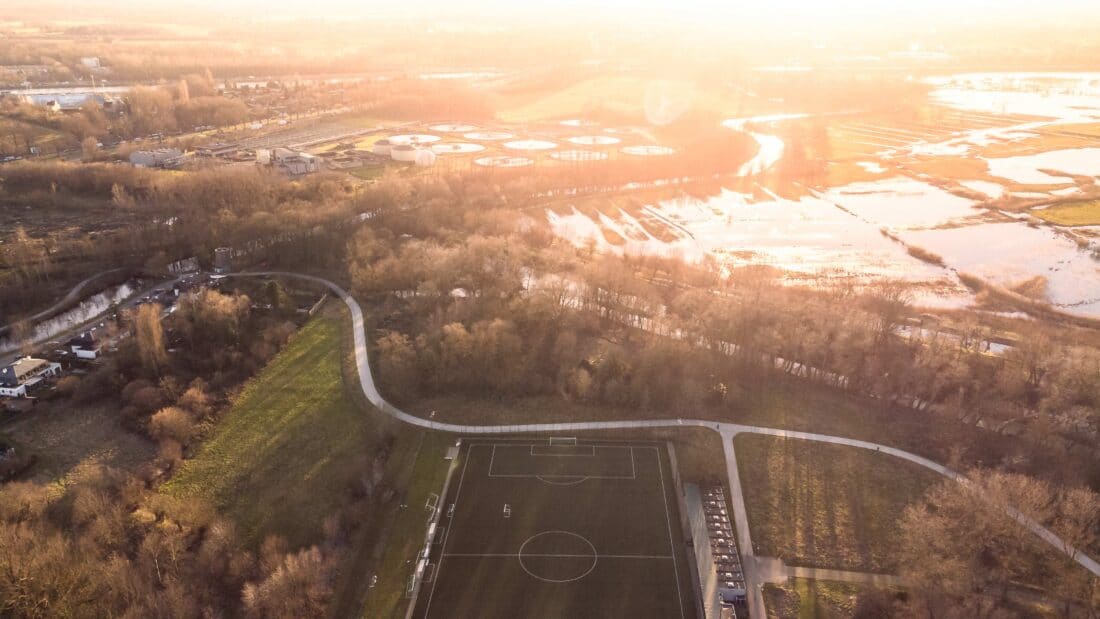
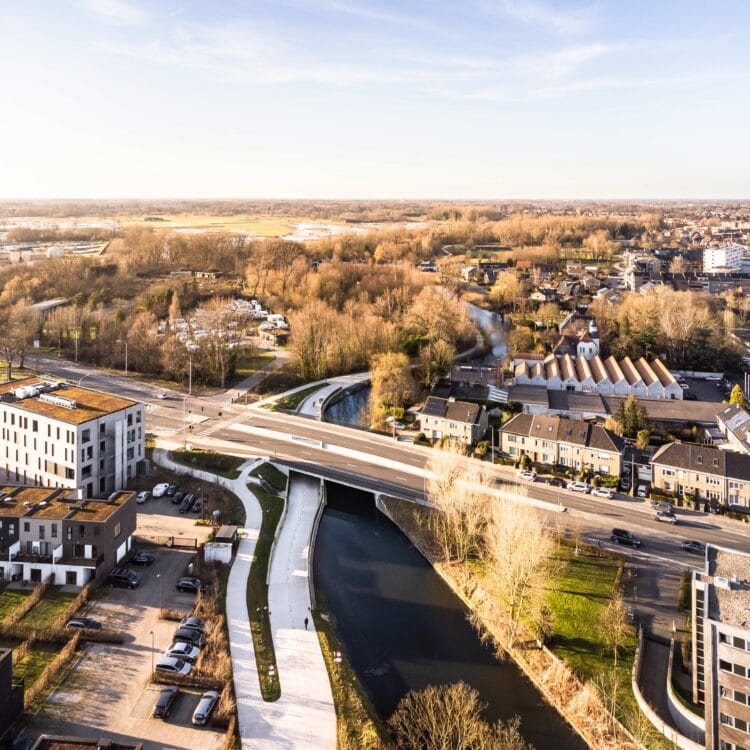
The ‘Westerringspoor’ or ‘F400’ cycle route is an important Ghent cycle highway that connects Gent-Sint-Pieters station with the Muide, Wondelgem, Mariakerke and the Brugse Poort. In 2018, the City of Ghent asked us to expand the bicycle highway with a cycle path on the edge of the Bourgoyen-Ossemeersen nature reserve. Two years later, we were also called in to build a new bicycle underpass on the busy Drongensesteenweg, to ensure the safety of cyclists.

Our Sustainable Mobility team was responsible for the entire study assignment, from sketch design to tender dossier and the coordination of the works.

Comfortable bike path in harmony with the environment

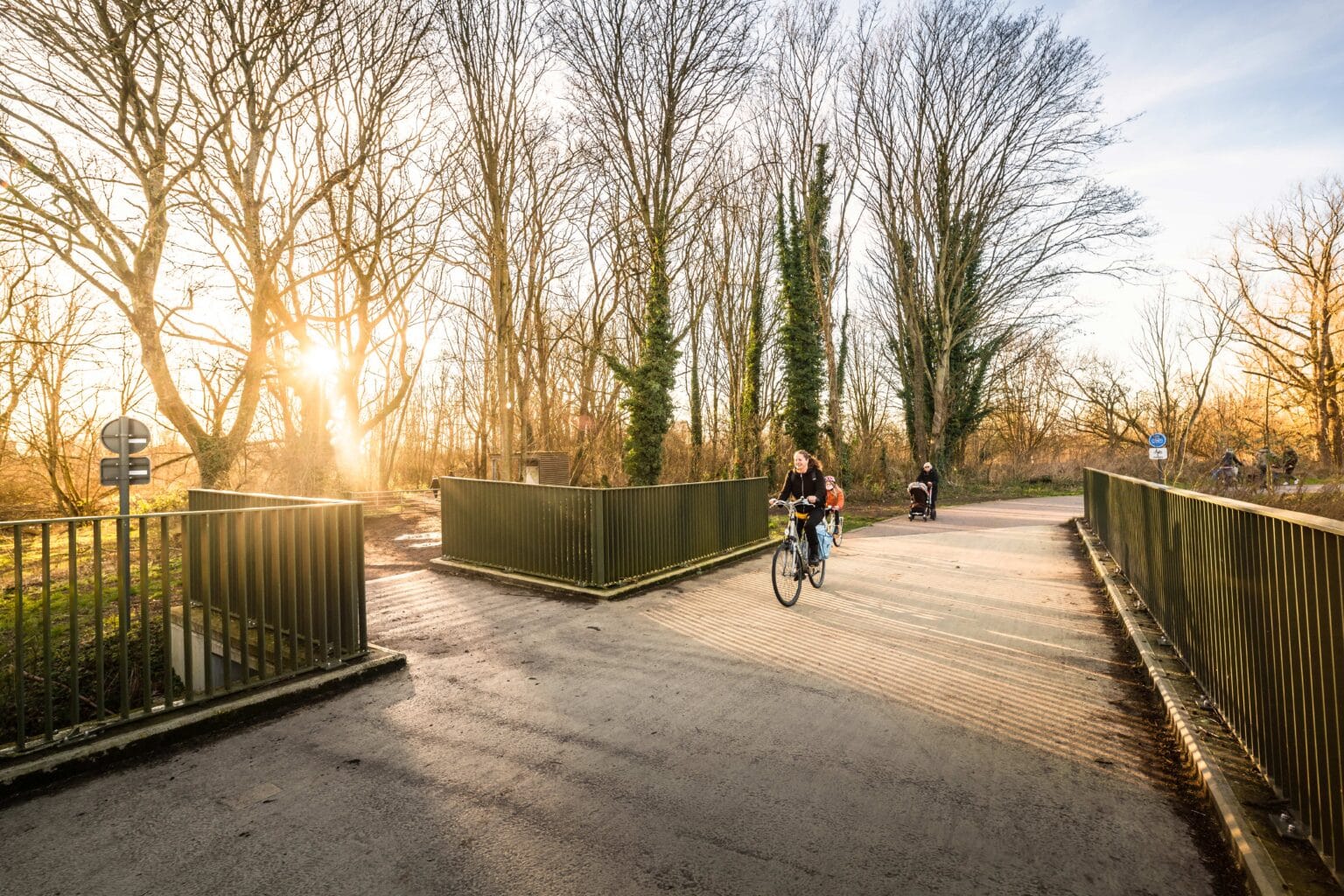
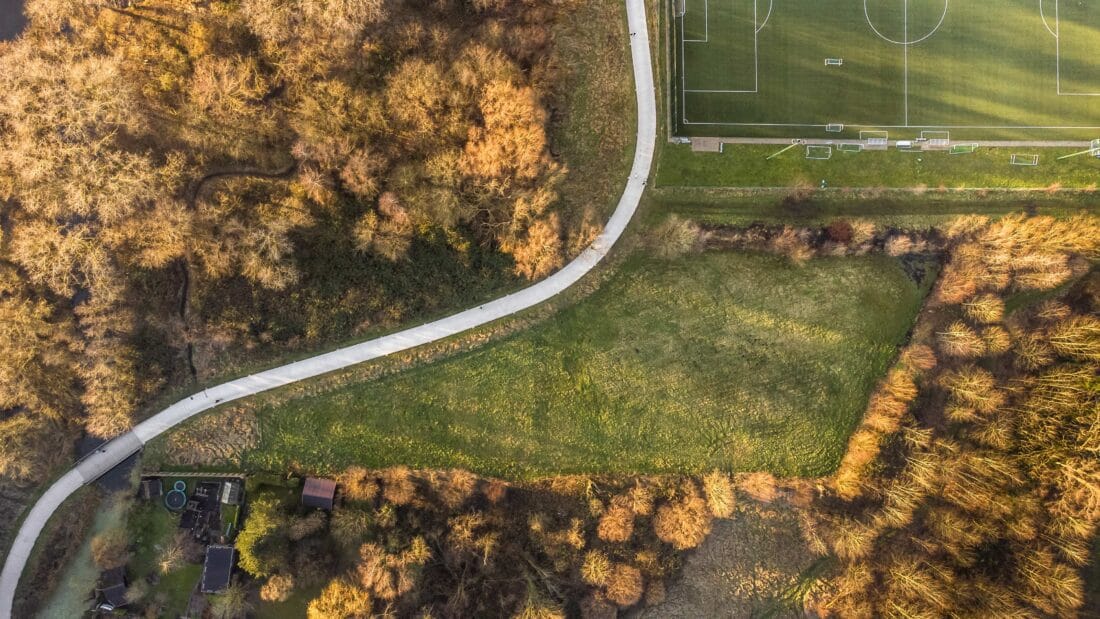
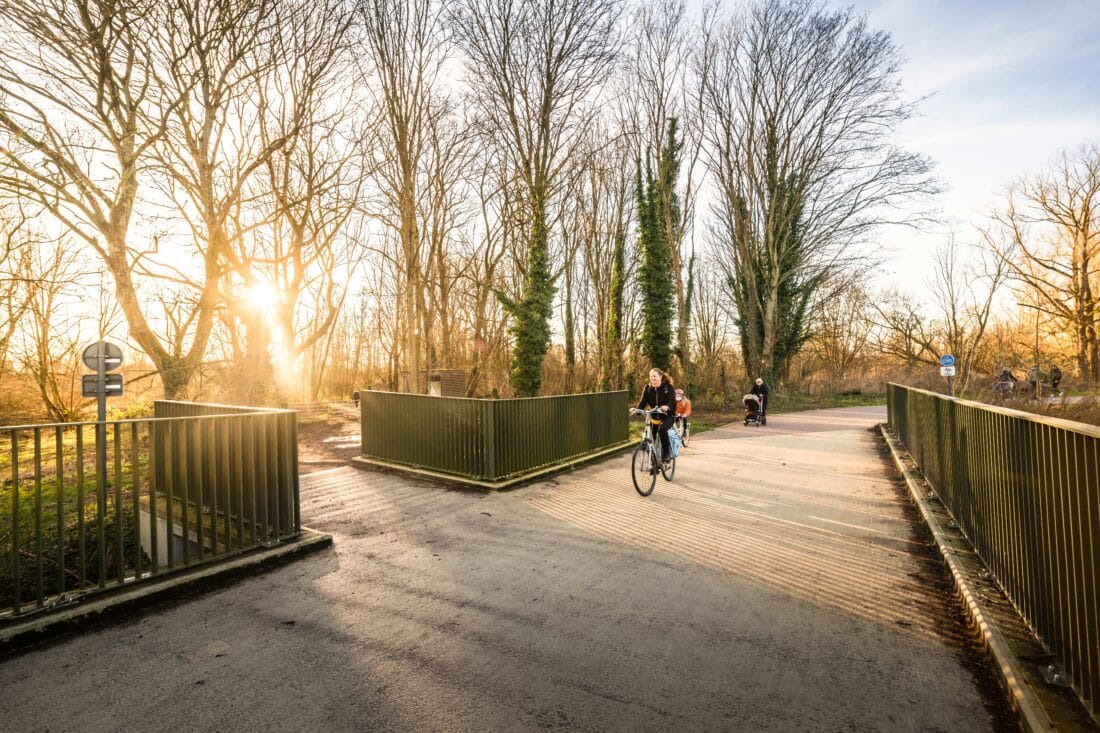
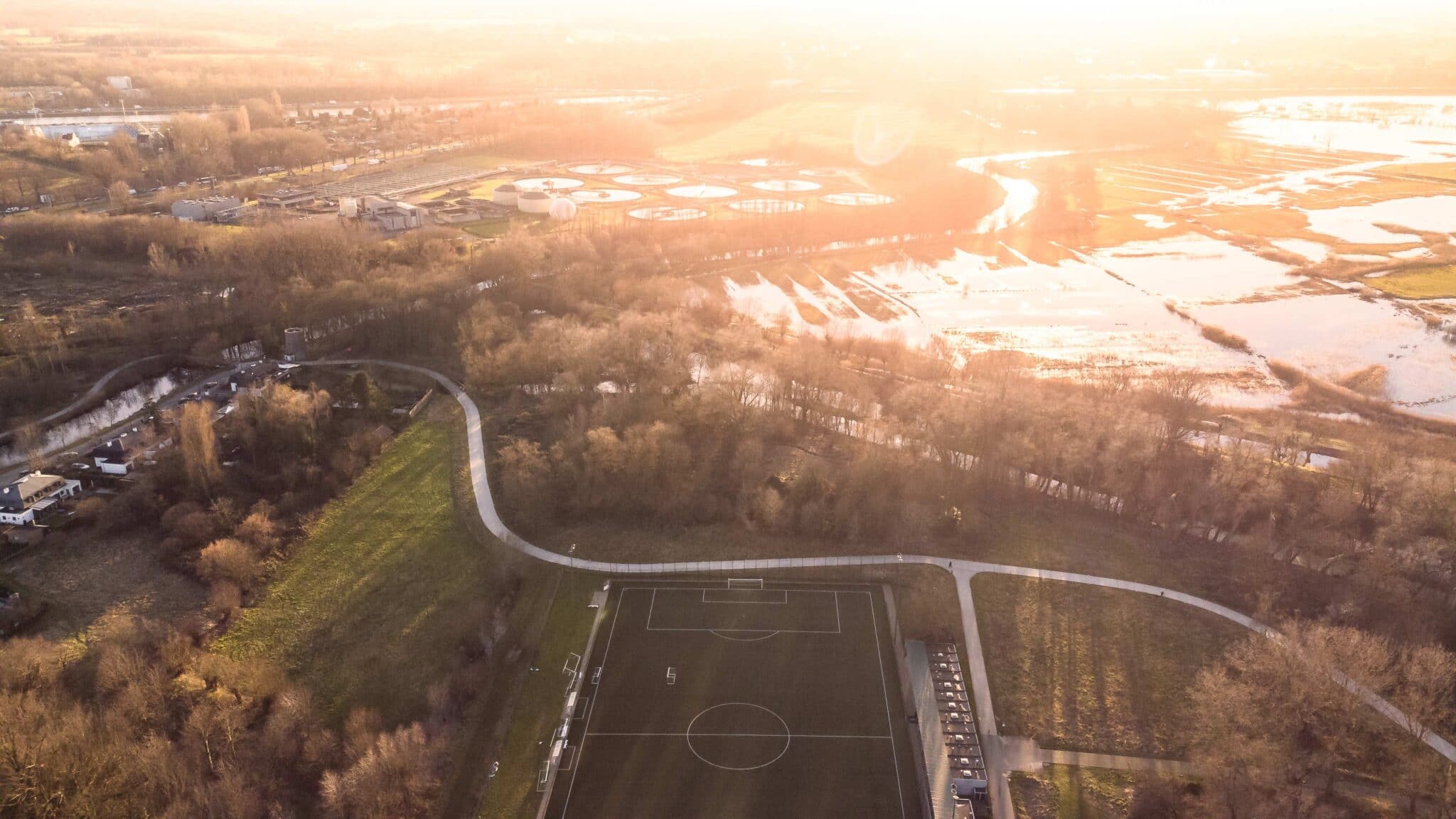
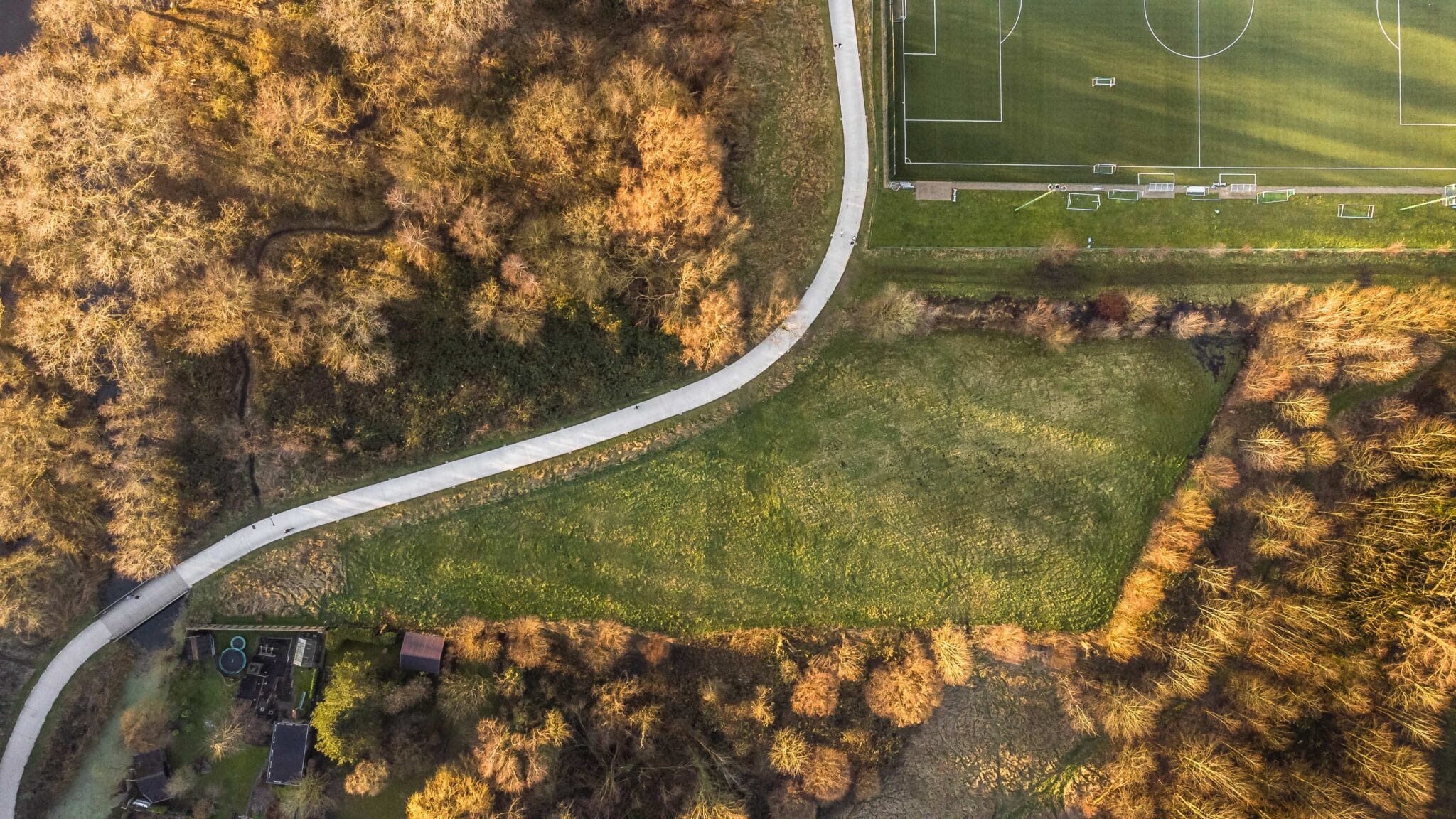
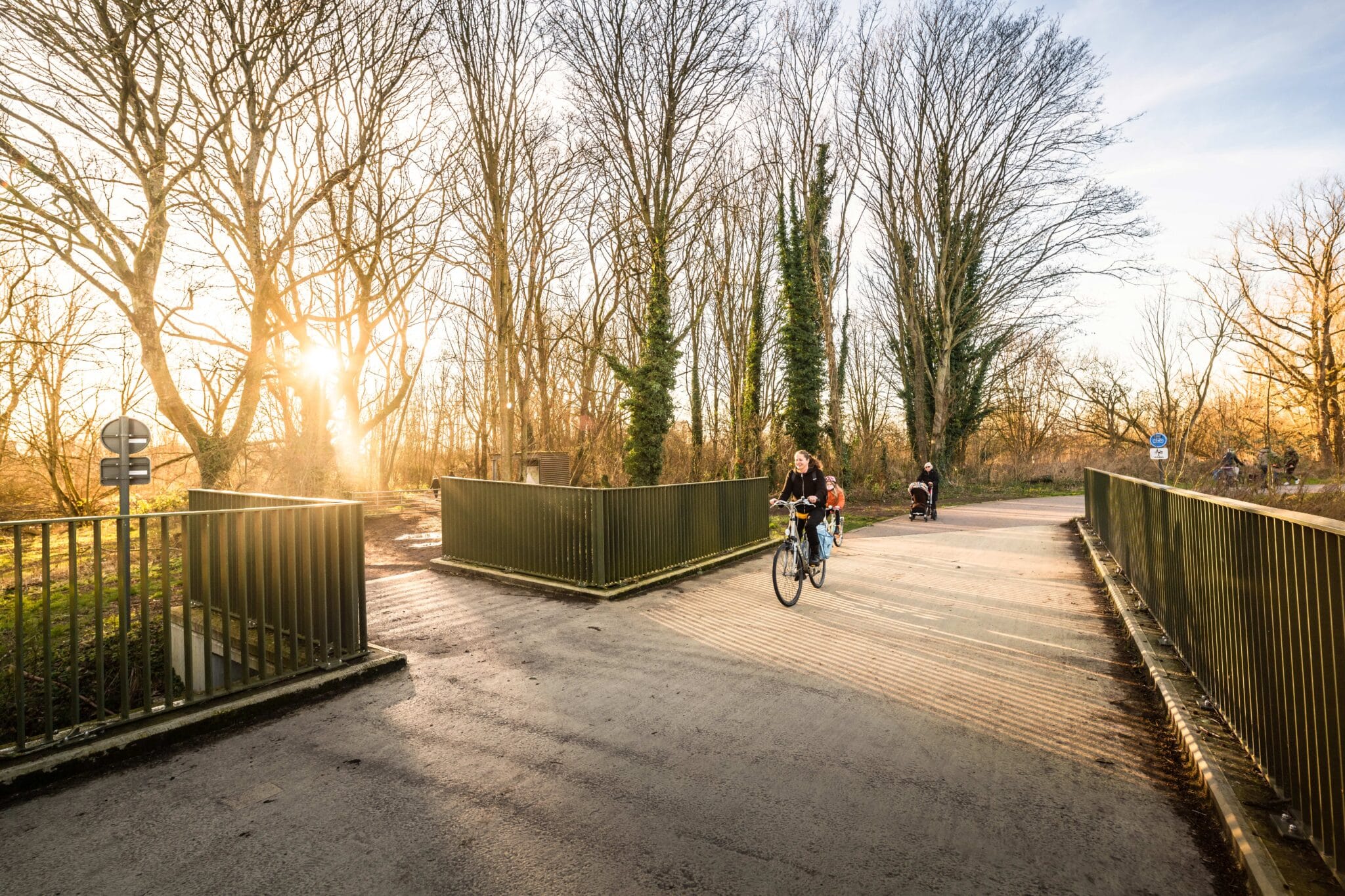
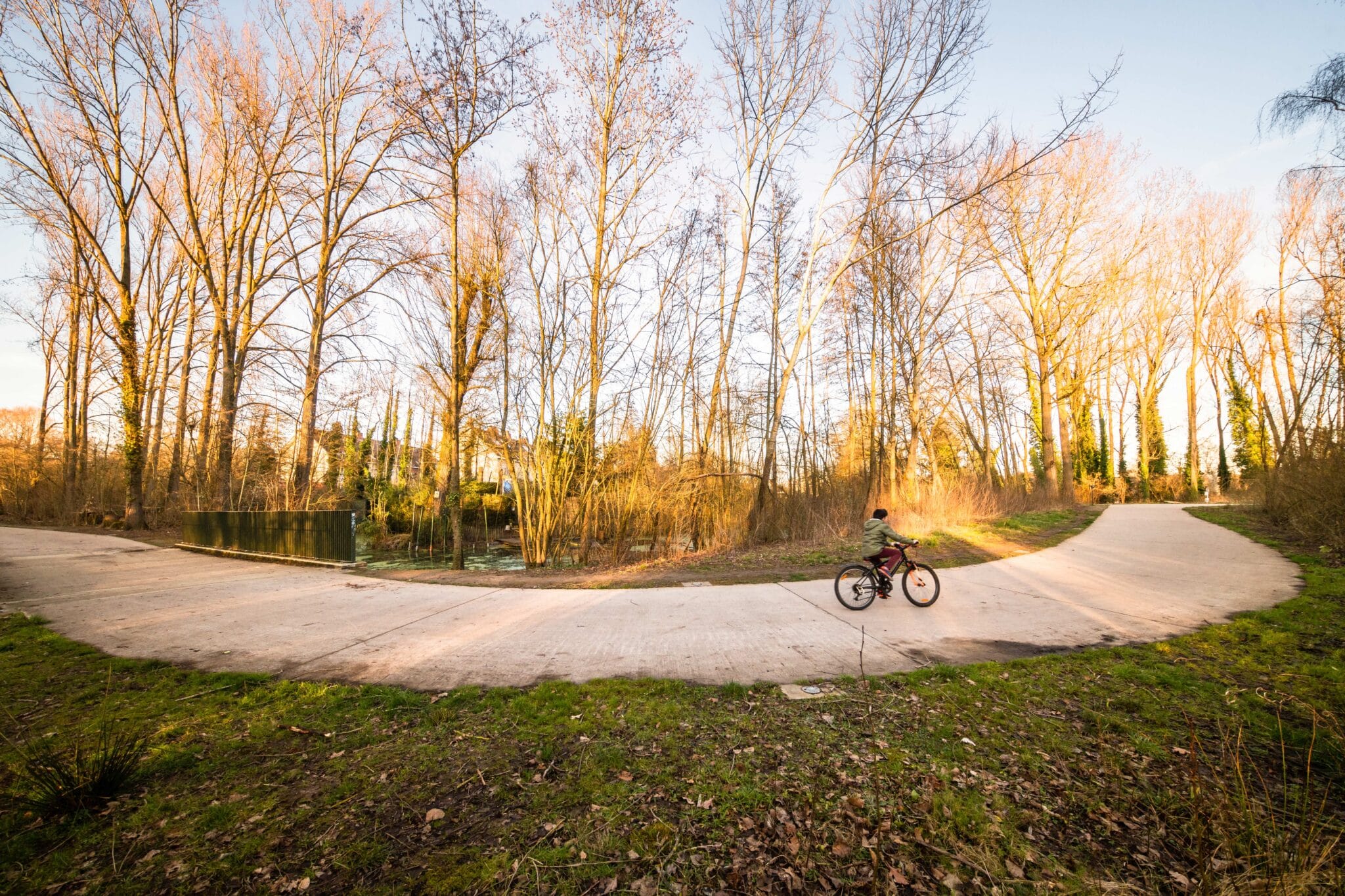
On the marshy terrain of the Bourgoyen-Ossemeersen protected nature reserve, we provided a cycling connection between Noormanstraat and Mahatma Ghandistraat. We opted for a brown, washed-out concrete pavement, so that the cycle path blends in completely with the natural environment.

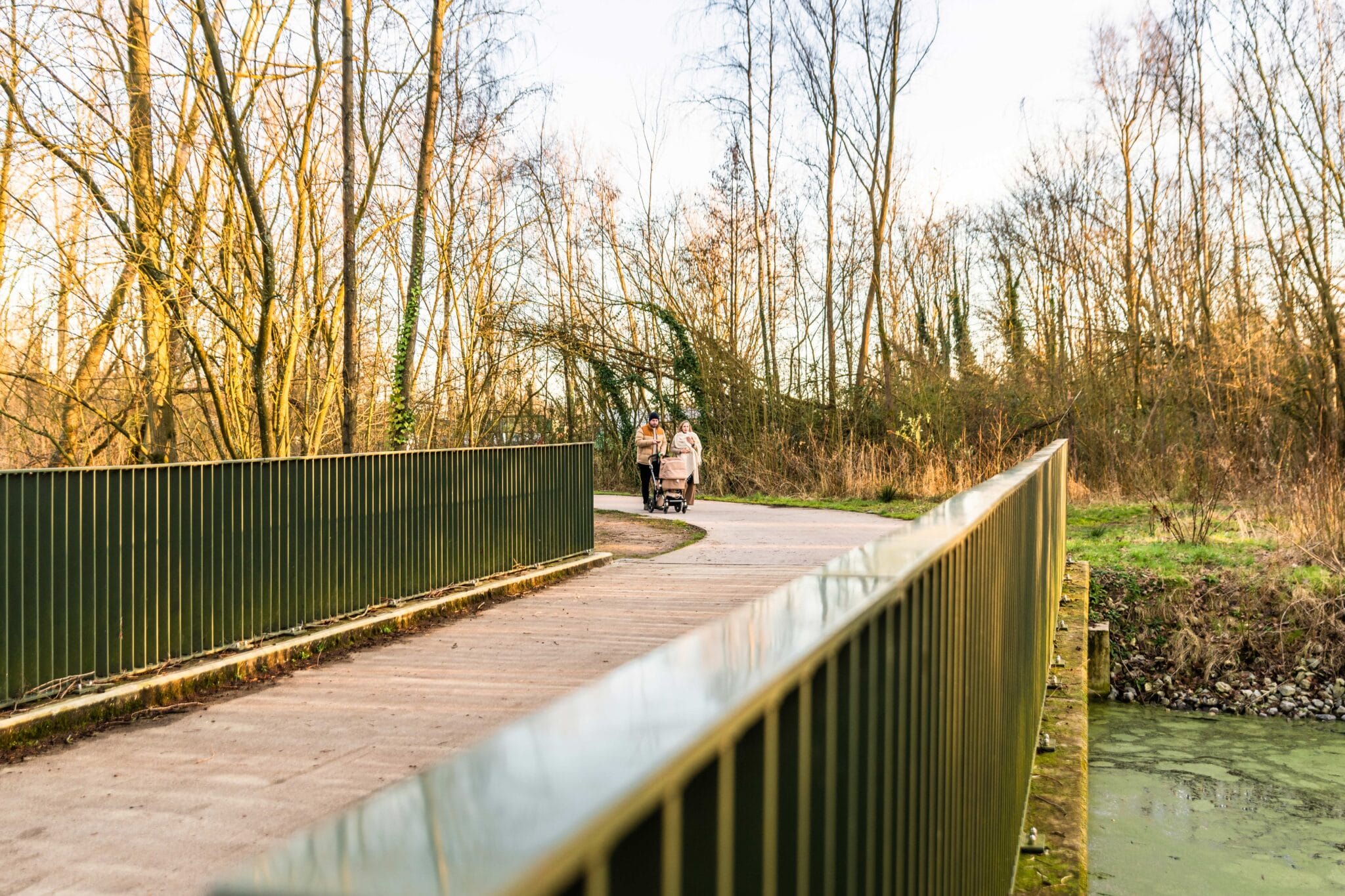
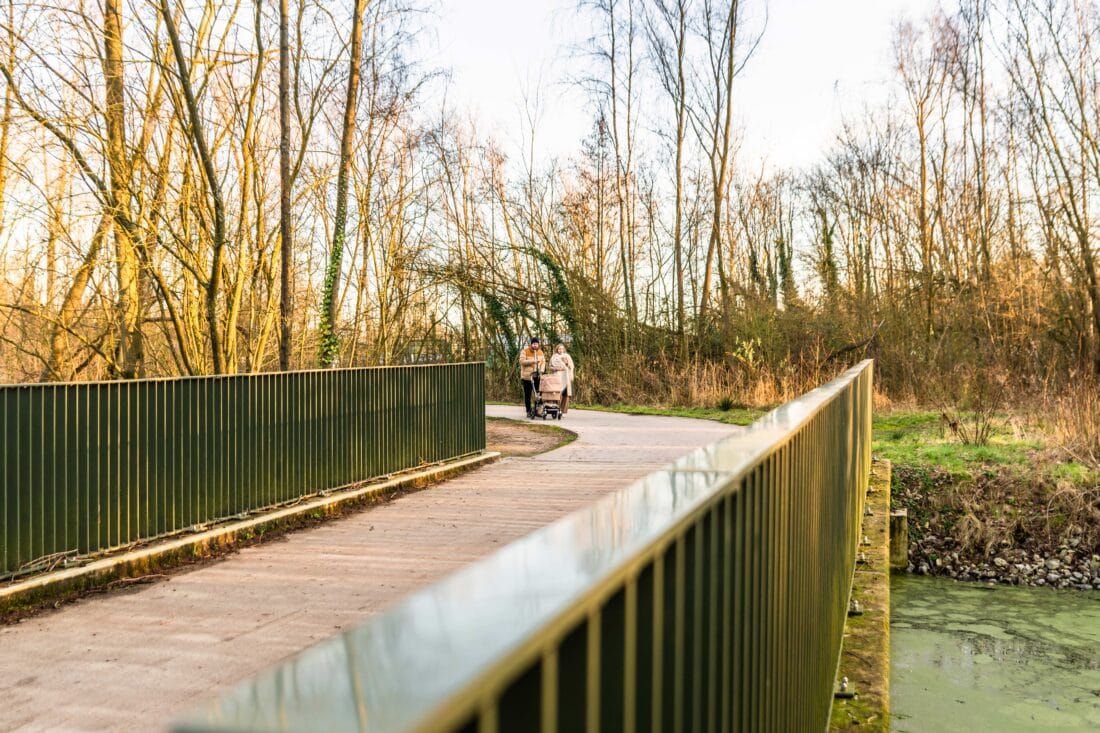
During the works, we constructed four bridges over watercourses. Three bridges (with a span of 13, 14.5 and 21 metres) were designed as concrete integral bridges, the fourth (with a span of 14 metres) was designed at the request of Onroerend Erfgoed in steel with a plank deck.

Safe bicycle underpass

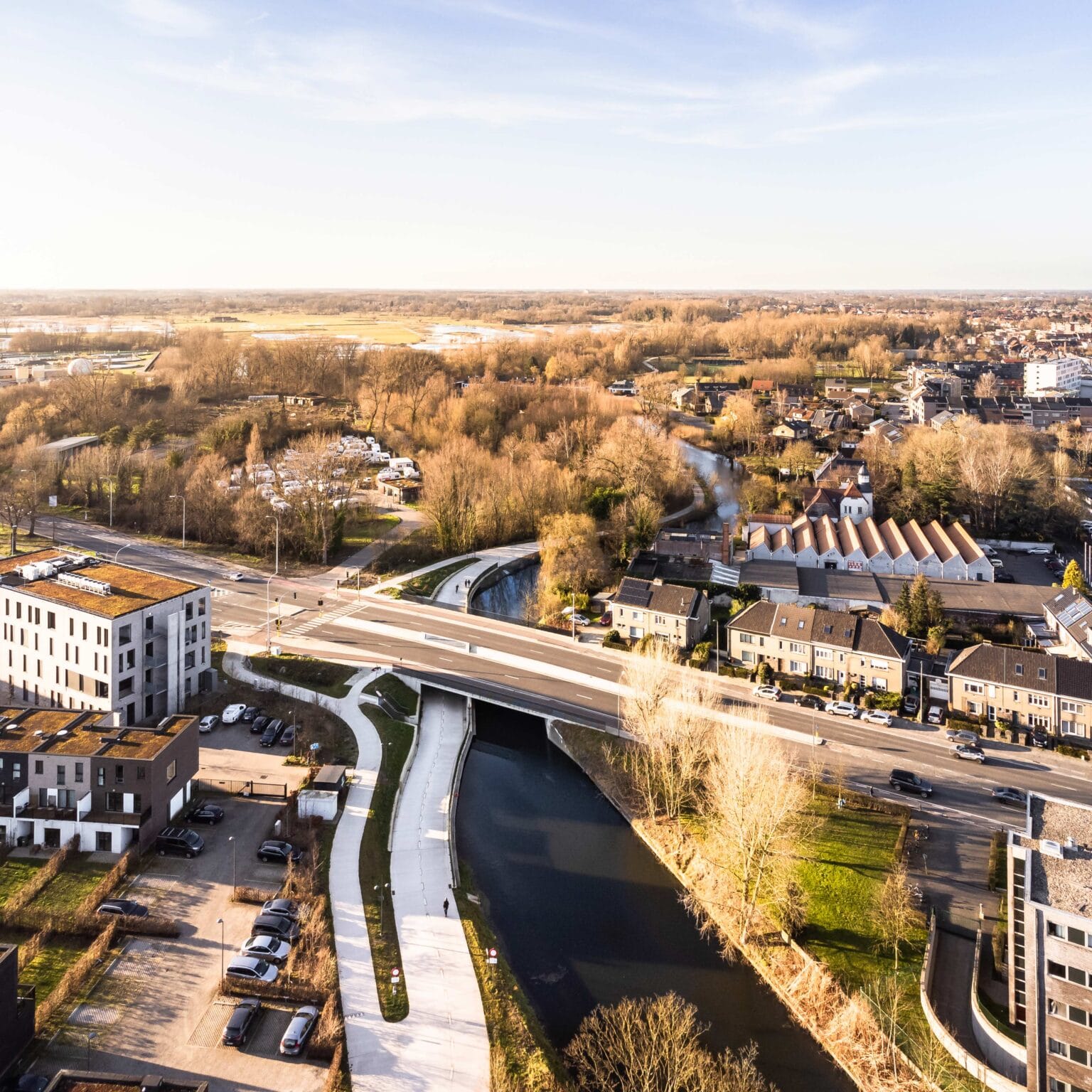
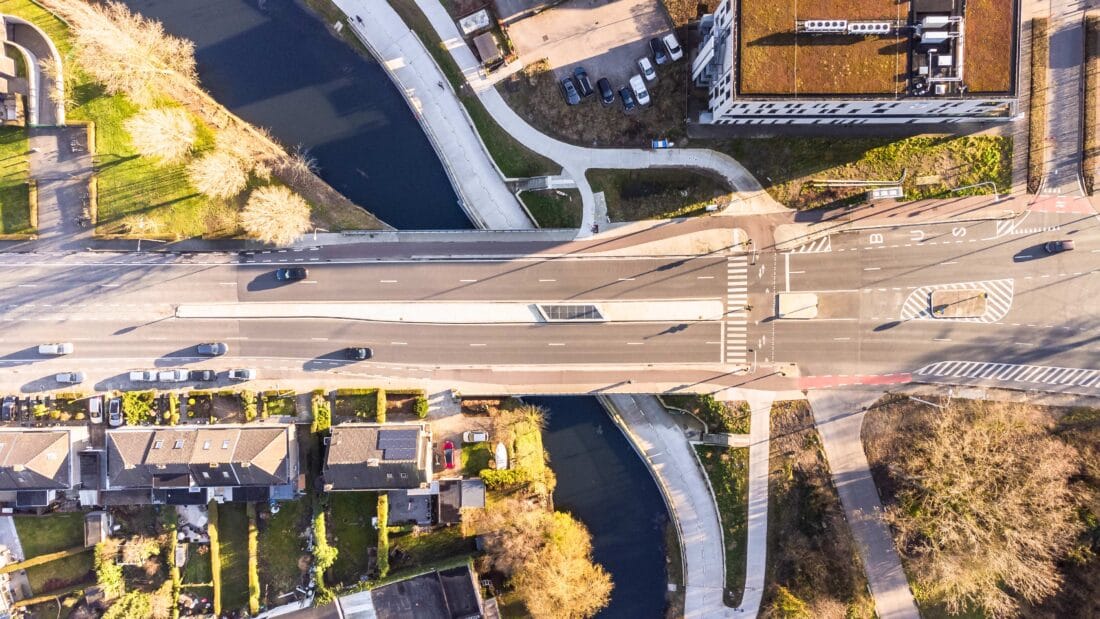
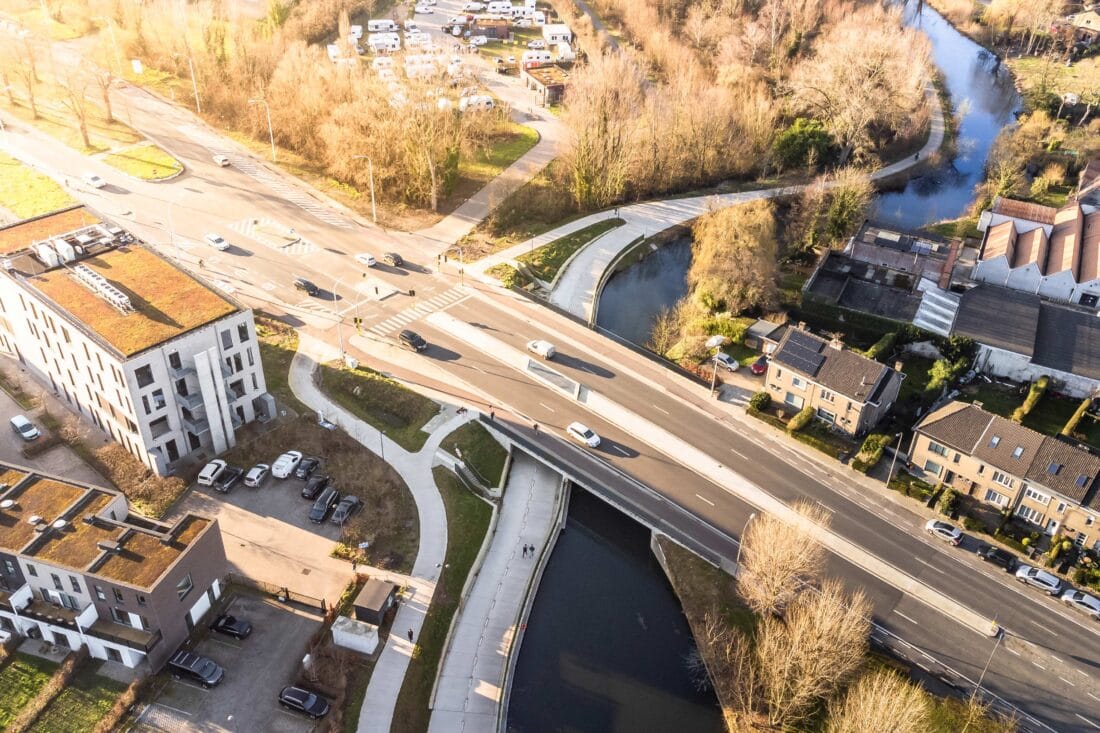
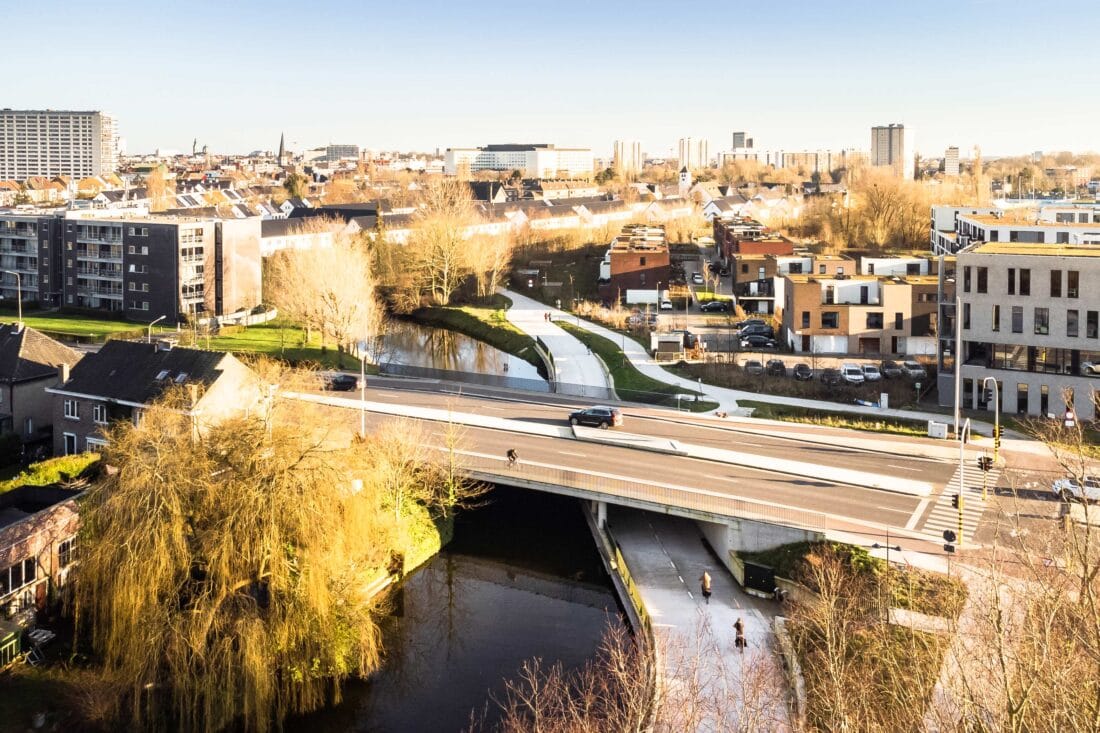
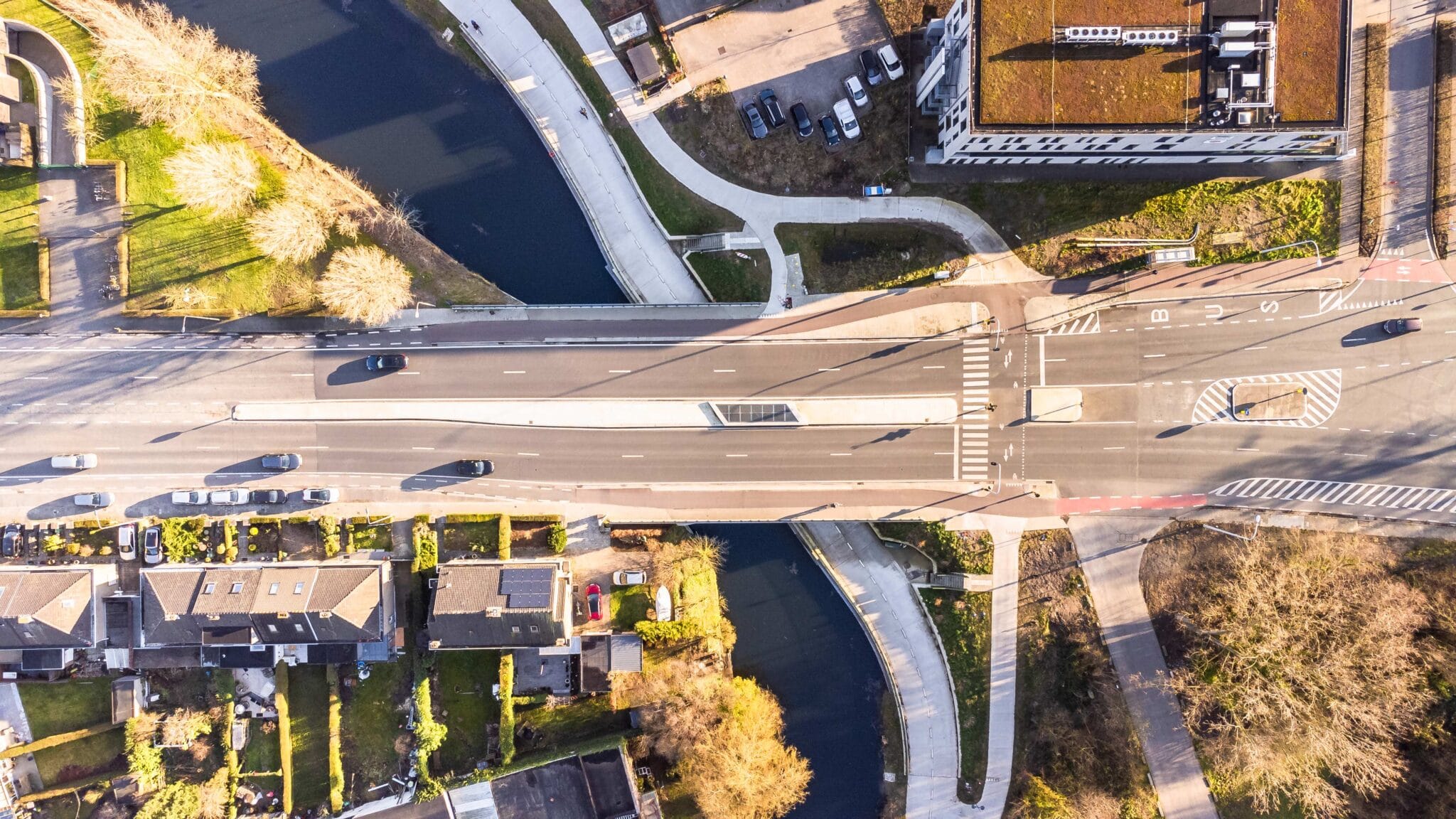
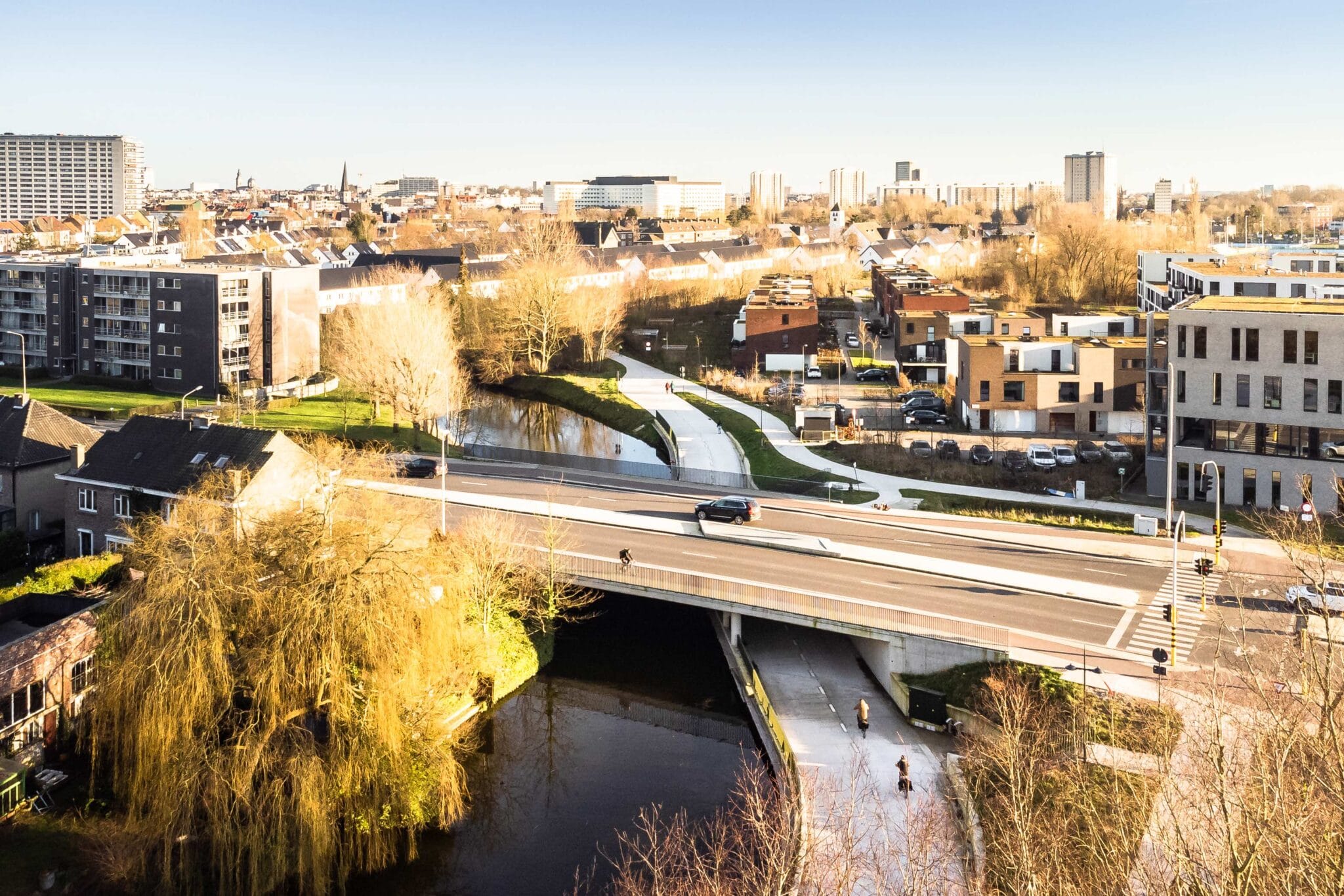
The Drongensesteenweg is one of the city’s most important roads, connecting the R40 with the R4 and also providing access to the E40. This major traffic artery carries a large volume of traffic to and from the city. Prior to the intervention, cyclists on the Westerringspoor had to cross the Drongensesteenweg via a signal-controlled bicycle crossing. This was not only unsafe, but also compromised cycling comfort and the continuity of the main route. To address this, the City of Ghent asked us to design a new bicycle underpass.

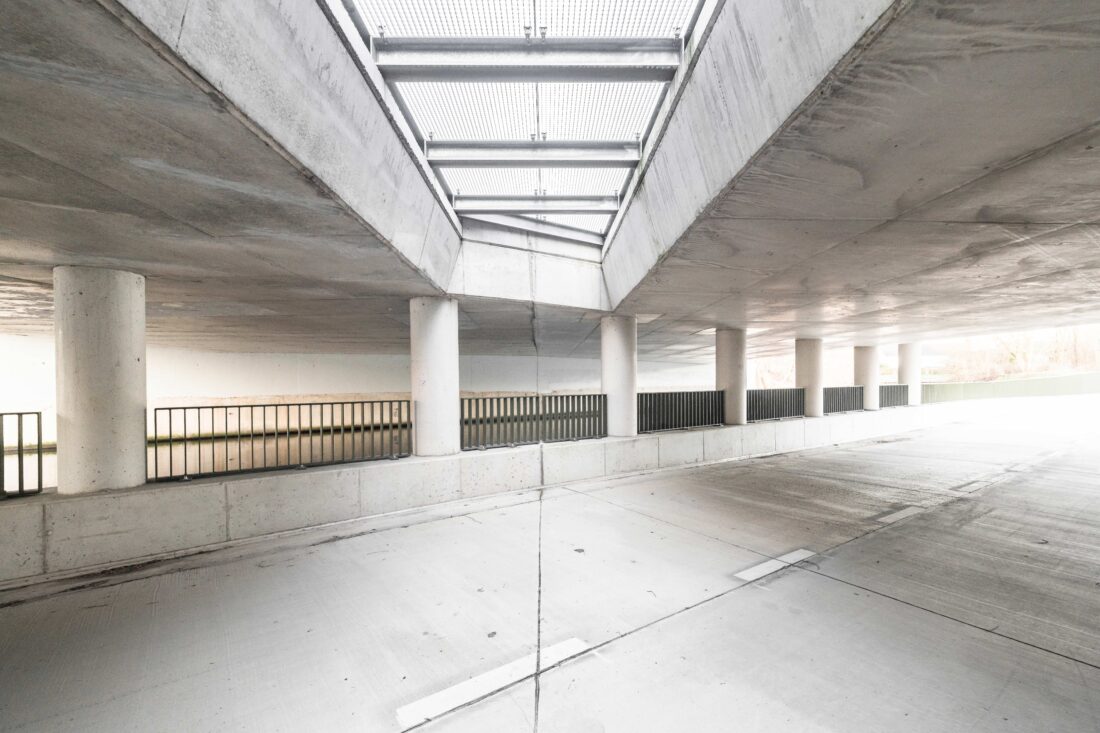
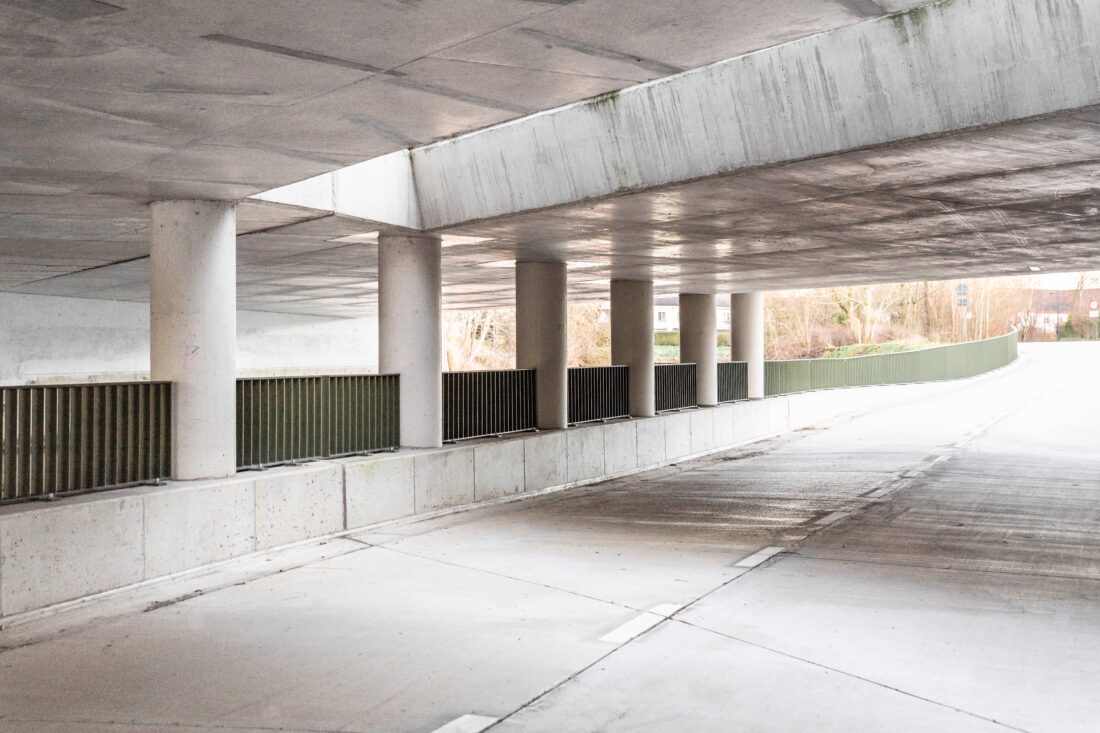
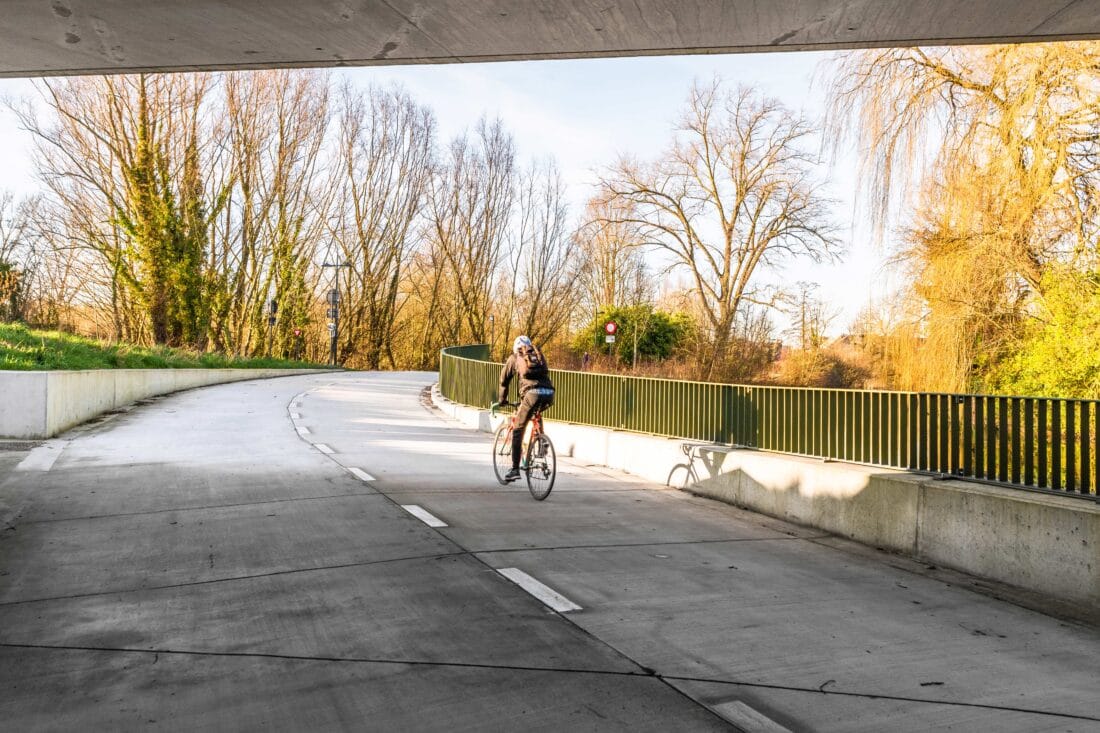
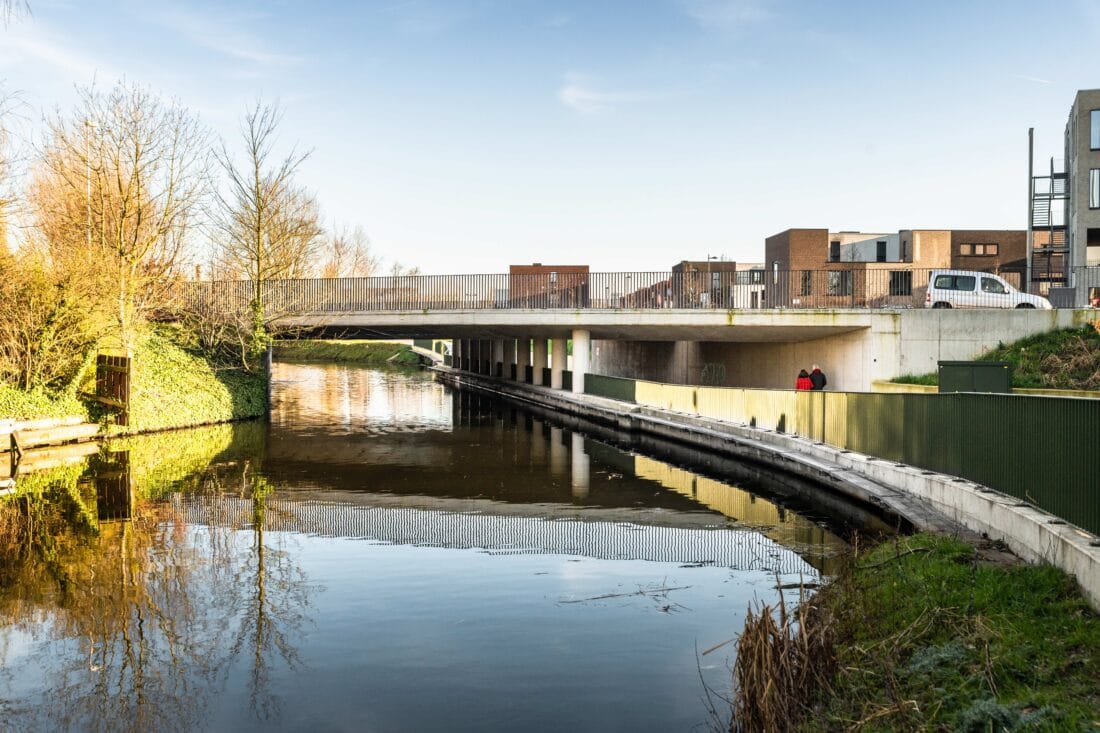
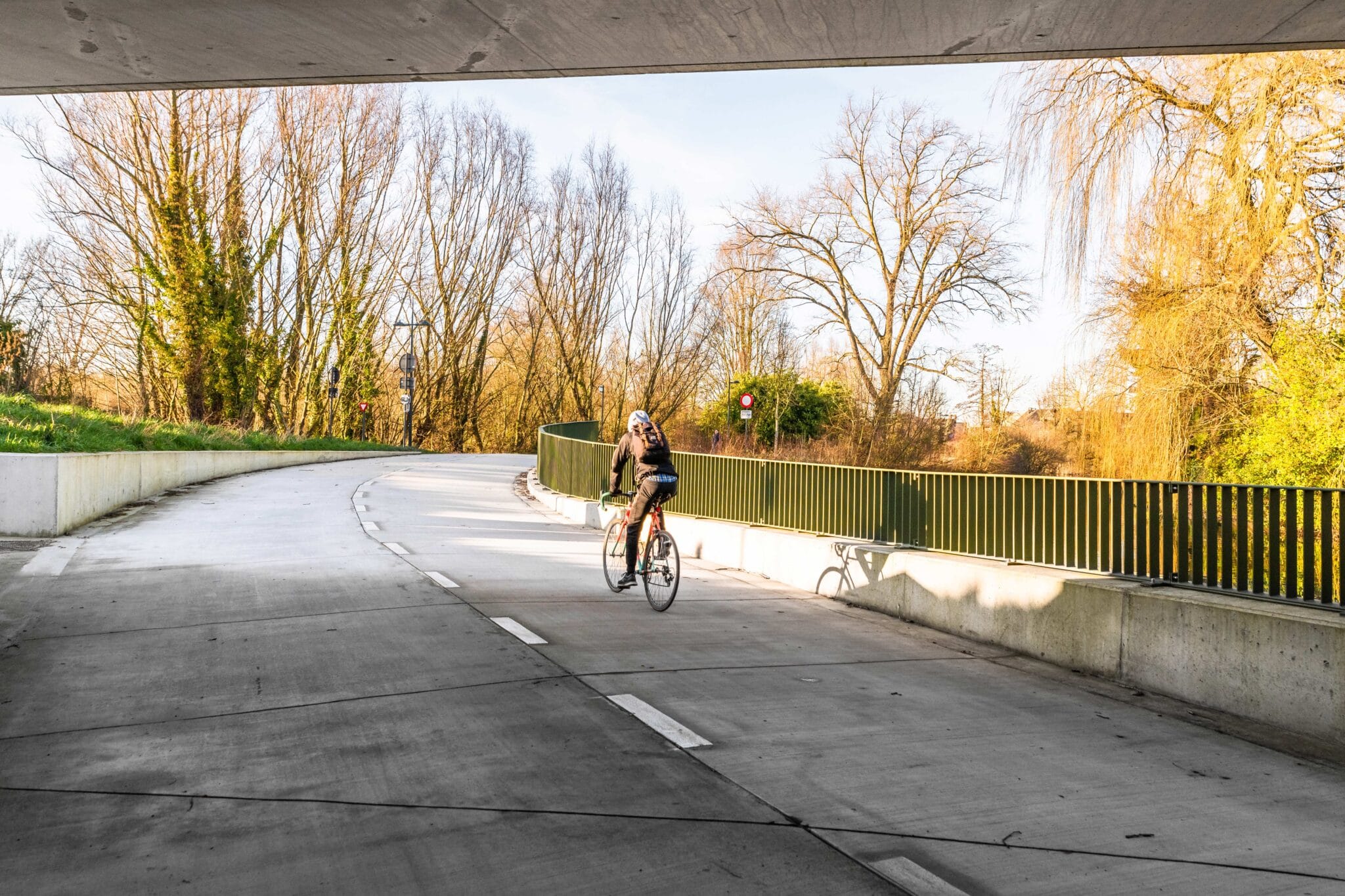
After evaluating several scenarios, we decided to construct a new bicycle tunnel connected to the existing Leie culvert. We expanded the sightlines in the tunnel by demolishing part of the existing wall and replacing it with a column wall, which has a positive impact on the perception and experience of the underpass. The project included, among other things, water-related civil engineering works, access ramps, fixed bridge spans, and road works.
Today, cyclists and pedestrians can safely and unobstructed cross the intersection of Bunderweg and Drongensesteenweg underground.